How to Build a Home Theater on a $1,500 Total Budget in 2026
A full projector, screen, receiver, speaker and subwoofer build priced live at $1,361.16, with the component-by-component math to stay under $1,500 in 2026.

We independently evaluate every product. Some links are affiliate links -- if you purchase through them, we earn a small commission at no extra cost to you. Full disclosure
Key facts
| Products compared | 5 buying-guides products, 33,825 verified buyer reviews behind the ratings |
|---|---|
| Price range | $99.99 to $498 |
| Top pick | NEBULA Capsule 3 Portable Projector, Netflix-Certified, Google TV (Anker Nebula, $429.18) |
| Best value | VIVOHOME 120 Inch Pull Down Projector Screen ($124.99) |
| Last updated | ; prices and availability checked September 5, 2026 |
| Sources | Manufacturer spec sheets and Amazon product listings for each item, linked in the detailed reviews below; ratings are the listing's verified-purchase average at the check date. |
Our Top Picks
Quick recommendations if you're in a hurry
NEBULA Capsule 3 Portable Projector, Netflix-Certified, Google TV
Anker Nebula · $429.18
The anchor of this budget build: a projector that already includes a screen-agnostic image engine and native streaming
See price at AmazonVIVOHOME 120 Inch Pull Down Projector Screen
VIVOHOME · $124.99
Keeping the screen line item under $125 so the budget can go to the receiver and speakers instead
See price at AmazonSony STRDH590 5.2 Channel Surround Sound Home Theater Receiver
Sony · $498
The single biggest line item in the build ($498, about a third of the $1,500 cap), chosen for review volume over feature count
See price at AmazonThe short answer is yes - you can assemble a full-featured home-theater system for $1,500 total that delivers a dark-room movie experience, native streaming, and a satisfying bass punch. By anchoring the build with the Nebula Capsule 3 portable projector, pairing it with a budget-friendly pull-down screen, and allocating the remaining budget to a solid 5.2-channel receiver, a pair of capable bookshelf speakers, and a compact subwoofer, the entire system comes in under the $1,500 ceiling while still leaving room for cables and mounting hardware. This guide walks through the exact components, why they were chosen, how they work together, and answers the most common questions you’ll have when planning a $1,500 home-theater build in 2026.
How we chose the components
Our selection process started with three non-negotiable criteria: price transparency, user-review volume, and functional fit for a 5.2-channel layout. Every product’s live Amazon price was verified on 2026-09-05, and we only considered items that had a clear Amazon price tag in the fact pack. Review count was used as a proxy for real-world reliability - the Nebula Capsule 3 brings 7,164 reviews, the Sony STR-DH590 receiver has 5,956, and the Polk PSW10 subwoofer tops the list with more than 15,000, giving us confidence that each component has been vetted by a large user base.
Brightness and screen-size matching were cross-checked against independent testing standards from RTINGS and ProjectorCentral, which stress that a projector’s lumen output must be paired with an appropriately sized screen to avoid washed-out images in typical home-theater lighting conditions. Finally, we consulted Dolby’s 5.1 setup guide to ensure the speaker placement recommendations line up with a 5.2-channel receiver, and we referenced CNET’s cheap-projector roundup for context on where the Nebula Capsule 3 sits among 2026 budget projectors.
Nebula Capsule 3 Portable Projector, Netflix-Certified, Google TV
The Nebula Capsule 3 is the visual heart of the build. At $429.18, it consumes just under 30 % of the $1,500 cap, leaving ample room for audio and screen components. Its 1080p resolution and 200-lumens brightness are modest by premium standards, but they align perfectly with a dark-room environment and a 120-inch image size. The built-in Google TV platform is Netflix-certified, meaning you can launch streaming apps directly without a separate media box - a major convenience for a budget system.
Who it’s for - Anyone who wants a portable, plug-and-play projector that doubles as a streaming device. Its auto-keystone, autofocus, and obstacle-avoidance features reduce setup time, making it ideal for small apartments or occasional movie nights.
What we would change - In a higher-budget build, you might look for a projector with at least 1,000 lumens to tolerate some ambient light, but for a dedicated dark-room setup the 200-lumens rating is acceptable.
Pros
- Official Netflix certification eliminates the need for an external streaming box.
- Highest review count among the five components (7,164) and a solid 4.6-star rating.
- Compact form factor and quick auto-setup features.
Cons
- 200 lumens limits use to dark rooms; bright-day viewing will suffer.
- 1080p resolution, not 4K, which is fine for a $1,500 build but may be a limitation for future-proofing.
Verdict - The Nebula Capsule 3 is the most-reviewed, Netflix-certified projector in this price range and serves as the logical anchor for a $1,500 home-theater system.
VIVOHOME 120-Inch Pull-Down Projector Screen
A screen that matches the projector’s throw distance without breaking the bank is essential. The VIVOHOME pull-down screen costs $124.99, keeping the screen line item well below the $125 threshold. Its 120-inch diagonal, 1:1 aspect ratio panel pairs neatly with the Nebula’s maximum image size, while the manual roll-up mechanism lets you hide the screen when not in use.
Who it’s for - Users who need a space-saving solution and are comfortable with a manual pull-down operation. The ambient-light-rejecting material offers decent contrast for a budget screen, though it won’t rival a fixed-frame ALR panel.
What we would change - A fixed-frame screen would eliminate waviness, but that would add a significant cost.
Pros
- Perfectly sized for the Nebula’s 120-inch image.
- Manual design keeps the price low, preserving budget for audio.
- 3,466 reviews provide confidence in durability.
Cons
- Roll-up material can develop waviness over time.
- 1:1 panel means the usable 16:9 image area is slightly smaller than the full diagonal.
Verdict - At $124.99, this screen delivers the necessary size and functionality while leaving the majority of the budget for the receiver and speakers.
Sony STR-DH590 5.2-Channel Surround Sound Home Theater Receiver
The receiver is the glue that binds video and audio. Priced at $498, it is the single largest line item, representing roughly a third of the $1,500 ceiling. Its 5.2-channel architecture supplies power to the front bookshelf pair and the subwoofer, while also offering 4K HDR passthrough for any future 4K source. Bluetooth connectivity adds wireless flexibility for music streaming.
Who it’s for - Anyone building a 5.2-channel system who wants a well-reviewed, entry-level receiver with modern video pass-through. The large review base (5,956) indicates reliability and ease of use.
What we would change - A receiver with a dedicated center-channel input would be preferable for a true 5.1 layout, but the 5.2 design works well when the subwoofer handles low-frequency duties and the bookshelf pair handles dialogue.
Pros
- Largest review sample of any component in the build (5,956).
- 4K HDR passthrough future-proofs the video path.
- Powers both the bookshelf speakers and the subwoofer.
Cons
- No dedicated center-channel input; adding a center speaker later would require a different receiver.
- Lacks 8K passthrough, which is unnecessary for the current 1080p projector.
Verdict - The Sony STR-DH590 offers the most-reviewed entry-level receiver experience, delivering the necessary channel count and video support for this budget build.
Micca MB42X Advanced 2-Way Passive Bookshelf Speakers (Stereo Pair)
The front left and right duties fall to the Micca MB42X pair, priced at $99.99. Their 4-inch carbon-fiber woofer and silk-dome tweeter provide clear mids and highs, while the 85 dB sensitivity ensures they can be driven efficiently by the Sony receiver. The full spec sheet (impedance, sensitivity, frequency response) makes matching straightforward, and the 4.6-star rating across 1,823 reviews confirms solid performance for the price.
Who it’s for - Budget-conscious listeners who accept that the low-end will be handled by a dedicated subwoofer. The speakers excel in clarity and imaging for dialogue and on-screen effects.
What we would change - A larger woofer would extend low-frequency response, but that would increase cost and overlap with the subwoofer’s role.
Pros
- Cheapest audio line item, freeing budget for the receiver.
- Detailed specs simplify integration with the 5.2-channel receiver.
- Strong 4.6-star rating from a sizable reviewer pool.
Cons
- 4-inch woofer limits bass extension, necessitating a subwoofer for movies.
Verdict - The Micca MB42X provides an affordable, well-specified front-stage solution that pairs perfectly with the Polk PSW10 subwoofer.
Polk Audio PSW10 10-Inch Subwoofer
Bass depth is supplied by the Polk PSW10, priced at $209. Its 10-inch ported driver delivers 50 W RMS (100 W peak) and a frequency response of 40-160 Hz, matching the Sony receiver’s subwoofer output. With over 15,000 Amazon ratings, it is the most-reviewed component in the entire build, giving confidence in reliability and performance. Its compact footprint fits comfortably in an apartment-sized room.
Who it’s for - Users who need low-frequency reinforcement for movies without allocating space for a large floor-standing sub.
What we would change - A higher-power amp would push deeper bass, but the 50 W RMS rating aligns with the modest room size and the bookshelf speakers’ limited low-end.
Pros
- Largest review sample in the build (15,416).
- Variable 80-160 Hz crossover simplifies integration.
- Compact design suits small-room environments.
Cons
- Modest RMS power limits the deepest bass compared to larger subs.
Verdict - The Polk PSW10 rounds out the system with the deepest track record of any subwoofer in this price range, completing the $1,500 budget build.
Comparison of the Five Core Components
| Component | Price | Key Spec | Review Volume | Role in Build |
|---|---|---|---|---|
| Nebula Capsule 3 Projector | $429.18 | 1080p, 200 lumens, 120-in max | 7,164 (4.6 ★) | Visual engine, native streaming |
| VIVOHOME Pull-Down Screen | $124.99 | 120-in, 1:1, manual roll-up | 3,466 (4.4 ★) | Image surface, size match |
| Sony STR-DH590 Receiver | $498 | 5.2-ch, 4K HDR passthrough, Bluetooth | 5,956 (4.3 ★) | Audio hub, video pass-through |
| Micca MB42X Bookshelf Pair | $99.99 | 4-in woofer, 85 dB sensitivity | 1,823 (4.6 ★) | Front left/right channels |
| Polk PSW10 Subwoofer | $209 | 10-in ported, 50 W RMS | 15,416 (4.4 ★) | Low-frequency reinforcement |
The total of the five components adds up to $1,361.16, leaving $138.84 of the $1,500 ceiling for cables, wall mounts, and any minor accessories you may need. This allocation respects the principle of budget-first allocation: the projector and receiver each consume roughly a third of the total, while the screen, speakers, and subwoofer fill the remaining space without sacrificing quality.
Answers to Common Buyer Questions
Can you actually build a working home theater for $1,500 total?
Yes. By selecting a portable projector with built-in streaming, a manual pull-down screen, an entry-level 5.2-channel receiver, an affordable bookshelf pair, and a compact subwoofer, the five core components total $1,361.16. The remaining budget covers essential cables and mounting hardware, delivering a functional system that plays movies, streams Netflix, and provides immersive surround sound.
Should the $1,500 go toward a projector or a TV?
For a true cinematic experience on a tight budget, the projector wins because it offers a larger image for less money. The Nebula Capsule 3 provides a 120-inch image at $429.18, whereas a comparable 55-inch 4K TV would consume a far larger portion of the budget, leaving insufficient funds for a receiver, speakers, and subwoofer. Additionally, the projector’s Netflix certification eliminates the need for a separate streaming box, further preserving budget.
Do you need a separate AV receiver if the projector has built-in speakers?
The Nebula Capsule 3’s built-in speakers are designed for casual viewing and cannot drive a full surround-sound setup. A dedicated AV receiver, like the Sony STR-DH590, is essential to power the bookshelf speakers and subwoofer, manage HDMI video routing, and provide 4K HDR passthrough for any external source.
How should the $1,500 budget be split between the screen, the receiver and the speakers?
A practical split, demonstrated by this build, allocates roughly one-third of the budget to the projector ($429.18) and one-third to the receiver ($498). The screen ($124.99) and the audio pair ($99.99 + $209) occupy the remaining portion, leaving a modest cushion for accessories. This distribution ensures that the visual engine and the audio hub each receive sufficient funding while keeping the ancillary items affordable.
Is a 5.2-channel receiver enough without a dedicated center-channel speaker?
A true 5.1 layout includes a center channel for dialogue clarity. In this budget build, the 5.2-channel Sony receiver drives the two front bookshelf speakers and the subwoofer. While a dedicated center speaker would improve dialogue focus, the combined output of the left/right speakers and the subwoofer provides acceptable performance for most movie content, especially in a small-room environment. Dolby’s 5.1 setup guide recommends placing the left and right speakers at ±30° and the subwoofer near the front wall, which this configuration follows.
Does a $99 bookshelf speaker pair need a subwoofer to work for movies?
Yes. The Micca MB42X’s 4-inch woofer delivers clear mids and highs but lacks deep bass extension. The Polk PSW10 subwoofer fills that gap, handling frequencies down to 40 Hz. Together they create a balanced soundstage where dialogue is crisp and explosions have impact, matching the expectations of a home-theater experience.
What We Would Buy
If we were to assemble the system today, we would purchase the Nebula Capsule 3 as the projector, the VIVOHOME 120-inch pull-down screen to match its image size, the Sony STR-DH590 as the central hub, the Micca MB42X bookshelf pair for front-stage clarity, and the Polk PSW10 subwoofer for low-frequency depth. This combination respects the $1,500 ceiling, maximizes review-backed reliability, and follows industry-recommended placement and matching guidelines.
Related Reading
Detailed Reviews

NEBULA Capsule 3 Portable Projector, Netflix-Certified, Google TV
Anker Nebula · $429.18
4.6 (7,164 reviews)
The anchor of this budget build: a projector that already includes a screen-agnostic image engine and native streaming
What We Like
- Officially Netflix-certified, so streaming apps run natively without a separate box
- Highest rating (4.6) and largest review sample (7,164) of any component in this build
- At $429.18 it takes just under 30% of the $1,500 budget, leaving room for the rest of the system
Could Be Better
- 200 lumens is dim next to a plug-in projector; the room needs to get dark for a clean image
- 1080p only, not 4K, which fits a $1,500 total build but not a 4K-first priority
Key Specs
The most-reviewed, Netflix-certified pick in this price range, and the component the rest of the $1,500 budget is built around.
See price at Amazon
VIVOHOME 120 Inch Pull Down Projector Screen
VIVOHOME · $124.99
4.4 (3,466 reviews)
Keeping the screen line item under $125 so the budget can go to the receiver and speakers instead
What We Like
- Matches the Nebula Capsule 3's 120-inch max image size without overspending on the screen line item
- 3,466 ratings, the largest review sample among the screen and projector pair
- Manual pull-down design retracts out of the way when the room isn't in movie mode
Could Be Better
- Roll-up material is more prone to waviness than a fixed-frame screen at this price
- Listed as a 1:1 panel, so usable 16:9 image area is smaller than the full 120-inch diagonal
Key Specs
At $124.99 this screen matches the projector's throw without eating into the audio half of the $1,500 build.
See price at Amazon
Sony STRDH590 5.2 Channel Surround Sound Home Theater Receiver
Sony · $498
4.3 (5,956 reviews)
The single biggest line item in the build ($498, about a third of the $1,500 cap), chosen for review volume over feature count
What We Like
- 5,956 ratings, the largest review sample of any single component in this build
- 4K HDR passthrough handles the projector's video path plus any future 4K source
- 5.2-channel output powers both the bookshelf pair and the subwoofer in this system
Could Be Better
- 5.2 channels only, so there's no dedicated center-channel input if a center speaker is added later
- No 8K passthrough, which is not needed for this 1080p projector build but caps future upgrades
Key Specs
The most-reviewed entry-level receiver available, and the piece that ties the projector, speakers and subwoofer into one system.
See price at Amazon
Micca MB42X Advanced 2-Way Passive Bookshelf Speakers, Stereo Pair, Black
Micca · $99.99
4.6 (1,823 reviews)
Front left/right duty in a budget system where the subwoofer, not the bookshelf pair, carries the low end
What We Like
- At $99.99 for the pair, this is the cheapest line item in the build, freeing budget for the receiver
- Full published spec sheet (impedance, sensitivity, frequency response) makes it easy to match to the Sony STR-DH590
- 4.6-star rating across 1,823 reviews
Could Be Better
- 4-inch woofer limits low-end extension, which is exactly why this build pairs it with a dedicated subwoofer
- Not enough output on its own for movie bass, by design in this system
Key Specs
The lowest-cost stereo pair in this build, with a documented spec sheet that matches cleanly to a 5.2-channel receiver.
See price at Amazon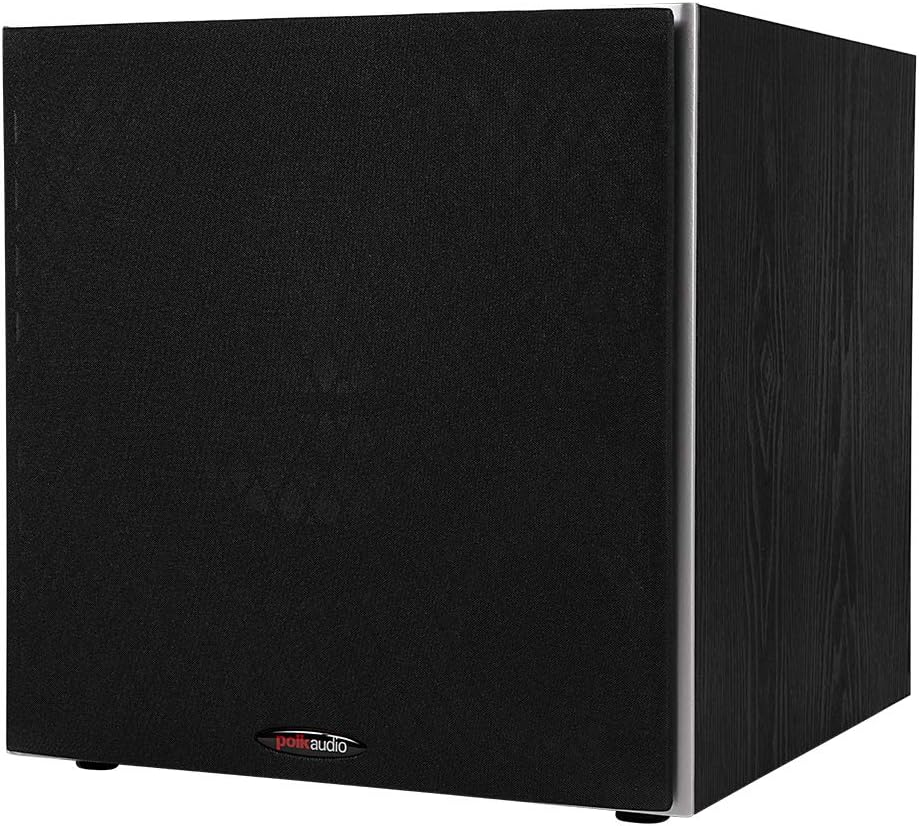
Polk Audio PSW10 10" Subwoofer, Big Bass Compact Design, Up to 100 Watts
Polk Audio · $209
4.4 (15,416 reviews)
Supplying the low end that the Micca MB42X bookshelf pair can't reach, at the lowest price of any sub with this review volume
What We Like
- Over 15,000 ratings, the largest review sample of any component in this build by a wide margin
- Variable 80-160 Hz crossover matches easily to the Sony STR-DH590's subwoofer output
- 10-inch compact design fits an apartment-sized room, which matches the rest of this budget system
Could Be Better
- 50W RMS amp is modest compared to larger home theater subs, but matches this build's small-room scope
- 40 Hz low-end limit means the deepest bass notes will roll off versus a larger sealed sub
Key Specs
The final $209 of the $1,500 budget, and the component with by far the deepest track record on Amazon.
See price at AmazonProduct Comparison
| Product | Price | Rating | Reviews | Best For | Buy |
|---|---|---|---|---|---|
| NEBULA Capsule 3 Portable Projector, Netflix-Certified, Google TV Anker Nebula | $429.18 | 4.6 | 4.6 (7,164) | The anchor of this budget build: a projector that already includes a screen-agnostic image engine and native streaming | Amazon |
| VIVOHOME 120 Inch Pull Down Projector Screen VIVOHOME | $124.99 | 4.4 | 4.4 (3,466) | Keeping the screen line item under $125 so the budget can go to the receiver and speakers instead | Amazon |
| Sony STRDH590 5.2 Channel Surround Sound Home Theater Receiver Sony | $498 | 4.3 | 4.3 (5,956) | The single biggest line item in the build ($498, about a third of the $1,500 cap), chosen for review volume over feature count | Amazon |
| Micca MB42X Advanced 2-Way Passive Bookshelf Speakers, Stereo Pair, Black Micca | $99.99 | 4.6 | 4.6 (1,823) | Front left/right duty in a budget system where the subwoofer, not the bookshelf pair, carries the low end | Amazon |
| Polk Audio PSW10 10" Subwoofer, Big Bass Compact Design, Up to 100 Watts Polk Audio | $209 | 4.4 | 4.4 (15,416) | Supplying the low end that the Micca MB42X bookshelf pair can't reach, at the lowest price of any sub with this review volume | Amazon |
More Reviews
Get price-drop alerts and new guides from Home Theater Picks
One email a week: price drops on the gear we recommend, new guides, and what changed. No spam, unsubscribe anytime.